
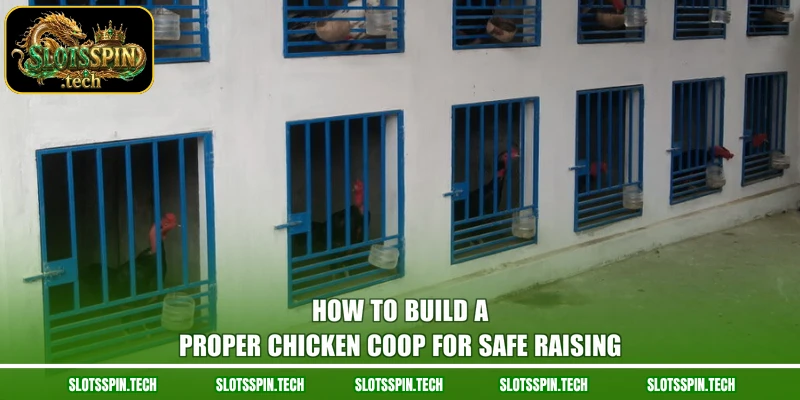
How to build a proper chicken coop should be planned carefully, from choosing the construction site and suitable materials to dividing the interior space efficiently. Each step below, compiled by Slotsspin, helps chicken keepers understand how to prepare and complete a practical structure that supports daily care. A well-designed coop does not need to be overly complicated, but it should provide a stable, dry, ventilated, and convenient environment for the flock.
How to build a proper chicken coop starting with site preparation
To understand how to build a proper chicken coop, site preparation should be completed first to create a stable foundation, prevent standing water, and make routine flock management more convenient.
The condition of the ground can affect almost every later stage of construction. A poorly drained site may remain damp after heavy rain, while uneven ground can make flooring, fencing, and structural installation more difficult. Preparing the area carefully from the beginning can reduce these problems.
Choose a suitable location and orientation
The structure should be placed on stable ground rather than in an area where rainwater frequently collects. The entrance should be oriented to reduce direct exposure to cold winds, particularly around the resting area.
In regions with hot weather, the roof should include an extended overhang to reduce direct sunlight reaching the walls and floor. Natural shade can also be useful, but the surrounding area should not become so enclosed that airflow is restricted.
The site should remain accessible for everyday activities such as delivering feed, removing waste, inspecting the flock, and cleaning equipment. Good access becomes especially important when the coop is used continuously throughout the year.
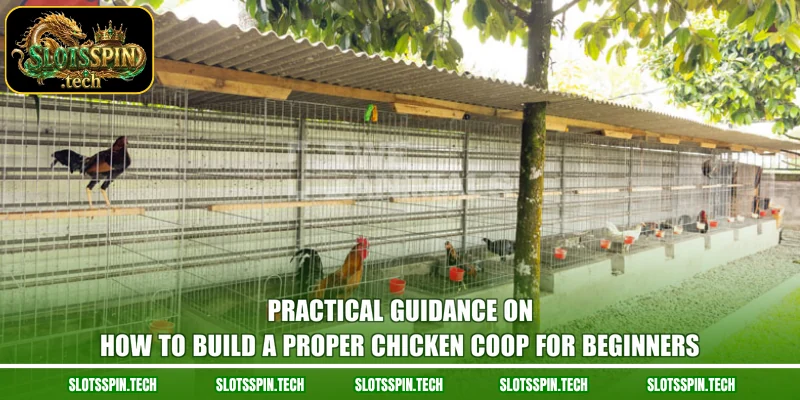
Prepare materials for the frame
Bamboo, timber, or steel can all be used depending on the size of the project and available budget. According to how to build a proper chicken coop, keepers should choose materials with durability appropriate to the expected period of use.
The roof should provide effective protection from rain while limiting excessive heat absorption. Roofing materials should also be installed securely enough to withstand normal weather conditions in the local area.
Surrounding mesh needs to be strong, with openings appropriate for the size of the chickens. Sharp wire ends or unfinished edges should be removed or covered because they may cause scratches or injuries when birds move close to the enclosure.
Structural connections deserve equal attention. Posts, beams, and joints should remain firm so that the frame does not become unstable after repeated exposure to wind, rain, or daily use.
Complete the flooring
Concrete flooring has the advantage of being relatively easy to clean, while soil or sand can work for smaller setups if dryness can be properly maintained. The surface should have a slight slope so that water drains away quickly after washing or wind-driven rain.
Regardless of the flooring material, persistent moisture should be avoided. Wet surfaces can make routine cleaning more difficult and may create unpleasant odors when waste accumulates.
Drainage should therefore be considered before the coop is fully enclosed. Water needs a clear route away from resting, feeding, and walking areas rather than collecting beneath equipment or along the walls.
Housing areas and chicken care equipment
Once the site has been prepared, the interior should be divided into clear functional areas. Resting spaces, feeding and drinking locations, and movement areas should be separated appropriately so that the flock does not become overly concentrated in one place.
This arrangement can also make maintenance easier. When feeding equipment, water containers, and resting areas have defined positions, keepers can inspect each section more systematically.
How to build a proper chicken coop with functional areas
The interior layout should prioritize ventilation and ease of cleaning. Feeders should not be positioned close to areas where waste tends to accumulate, while drinkers should be kept away from places where sand, bedding, or droppings can easily fall into the water.
Walkways should also be wide enough for keepers to inspect the flock and replace or clean equipment without unnecessary difficulty. If the structure is small, careful placement becomes even more important because each section has limited space.
Frequently used equipment should remain easy to remove. This allows feeders, drinkers, and other items to be cleaned separately instead of forcing the entire interior to be rearranged.
Choose the location for the coop
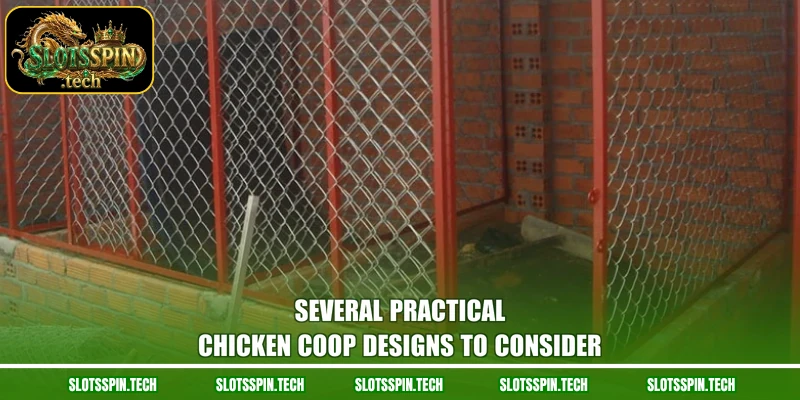
The construction area should have firm ground and should not receive runoff from higher surrounding land. According to how to build a proper chicken coop, there should be enough distance between the coop and nearby structures to support airflow. The entrance should have a secure latch and be large enough to carry feed and cleaning equipment inside:
- Sturdy four-sided roof design: Suitable for long-term structures with a strong load-bearing frame, secure joints, an appropriate roof slope, and wide eaves that help prevent rain from reaching the floor.
- Common two-sided roof design: Uses two roof sections meeting at the ridge, combined with mesh walls and curtains that can be adjusted according to weather conditions.
- Simple coop design: Suitable for small-scale housing using readily available materials, with a firmly secured frame, sufficiently wide roof, and fencing that minimizes unnecessary gaps.
- Individual compartment cages: Appropriate when birds need to be separated, provided each compartment offers enough room for a chicken to stand, turn around, eat, and drink without sharp mesh edges.
The most suitable design depends on flock size, available land, local weather, maintenance needs, and the expected period of use. A larger or more elaborate structure is not automatically better if it is difficult to clean or poorly ventilated.
Read more: Fighting Cock Color Compatibility – Five Elements Guide
How to build a proper chicken coop for different weather conditions
Once the frame has been completed, keepers should adjust the structure according to actual climatic conditions. The roof, curtains, mesh walls, and entrance orientation all contribute to controlling temperature, humidity, and airflow inside the coop.
Weather protection should not mean completely sealing the structure. Chickens still require adequate air circulation, so the objective is to reduce harsh exposure while maintaining ventilation.
Adjust the coop orientation for weather conditions
The roof should have a moderate slope so rainwater can drain quickly, while the eaves should extend far enough to reduce wind-driven rain. During cold weather, curtains can be lowered on sides exposed to strong winds, but some ventilation should still be maintained.
On hot days, upper mesh sections can be opened more widely to reduce trapped heat. Air should be able to move through the structure without creating strong drafts directly across the birds’ resting area.
Seasonal adjustments can be made gradually. Keepers should observe whether the interior remains excessively hot, damp, or stuffy and modify curtains or ventilation openings accordingly.
What are the advantages of sand flooring?
Sand drains water relatively quickly and allows the surface layer to be replaced when an area becomes dirty. In how to build a proper chicken coop, keepers still need to inspect the flooring regularly to prevent prolonged dampness. Several warning signs should be monitored:
- Unpleasant odors or stuffy air: These are often associated with accumulated waste or inadequate air circulation.
- Damp surfaces: Check drinker locations, roofing, and areas where rainwater may enter.
- Clumped sand: Turn over the surface layer or replace dirty sections to keep the resting area drier.
Sand flooring still requires routine maintenance. Simply using sand does not eliminate the need to remove waste or inspect areas around water containers where moisture can accumulate more quickly.
Arrange perches for the flock
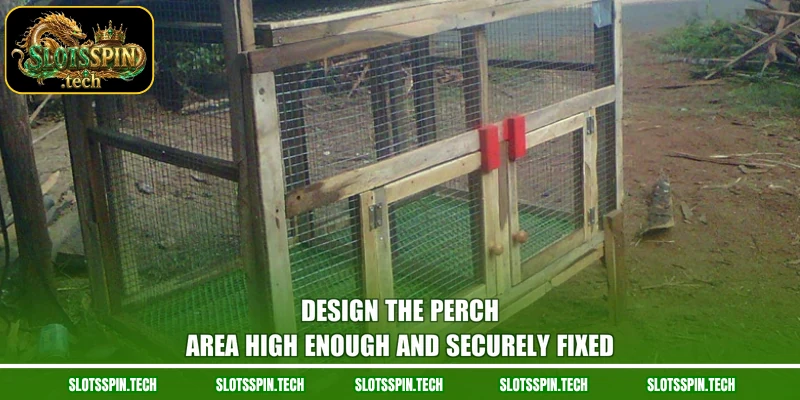
Perches should be positioned above the floor and secured firmly to the walls or frame. When applying how to build a proper chicken coop, the perch surface should have enough texture to provide grip without containing sharp edges that could injure the birds’ feet.
The distance between perches should be sufficient to prevent excessive crowding while the flock is resting. Their height should also be practical for the size and condition of the chickens being housed.
Perch placement should take cleaning into account. Keepers should be able to remove, clean, inspect, and reinstall the bars without dismantling large parts of the coop. Periodic inspection can also identify cracks, loose fittings, or damaged surfaces before they become larger maintenance problems.
Conclusion
How to build a proper chicken coop should follow a clear sequence, beginning with ground assessment and material selection before moving to frame construction and interior organization. A suitable structure does not have to be elaborate or expensive, but it should remain sturdy, dry, well ventilated, and easy to maintain. Thoughtful drainage, weather protection, functional areas, and accessible equipment can make everyday flock care more practical.
Pingback: Fish Hunter King - Exciting Boss Hunting Reward Game